

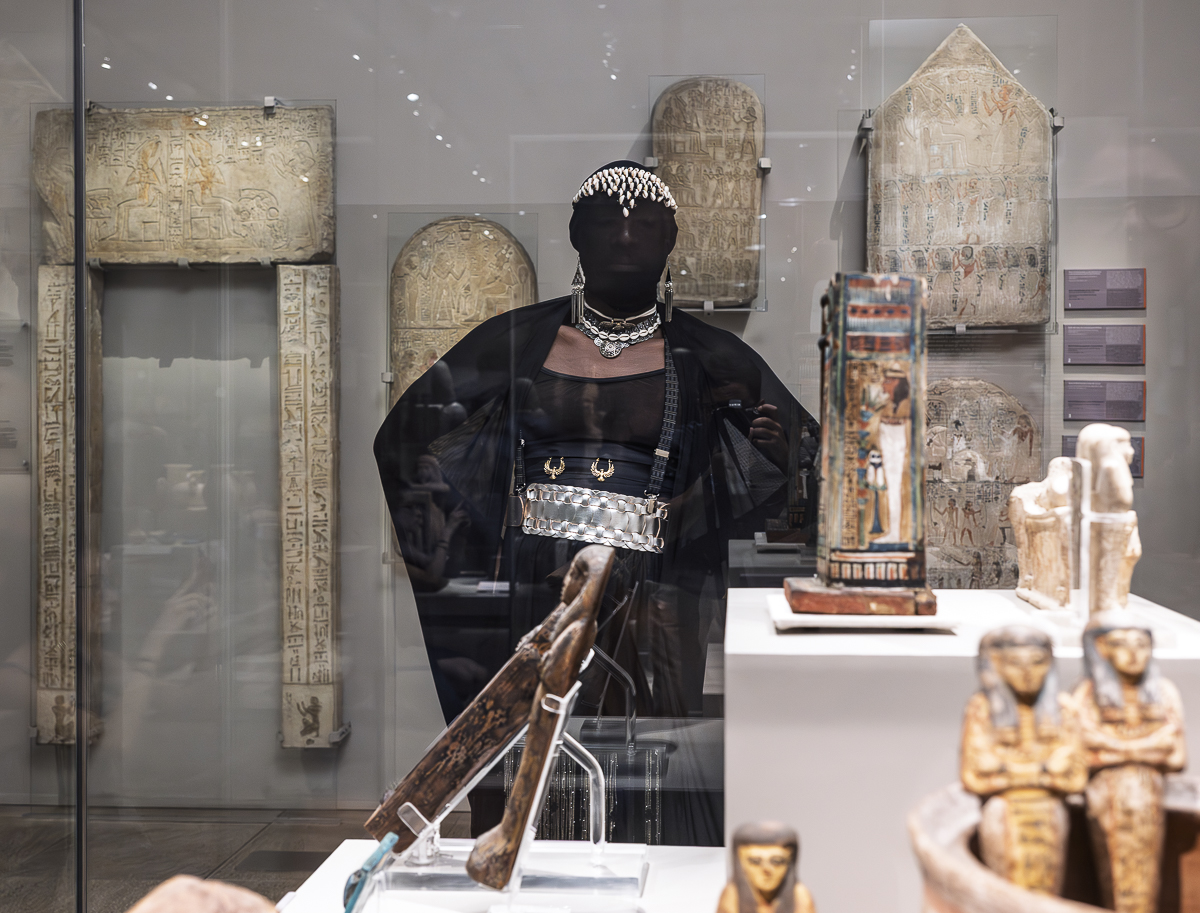
Group residency at Museo Egizio
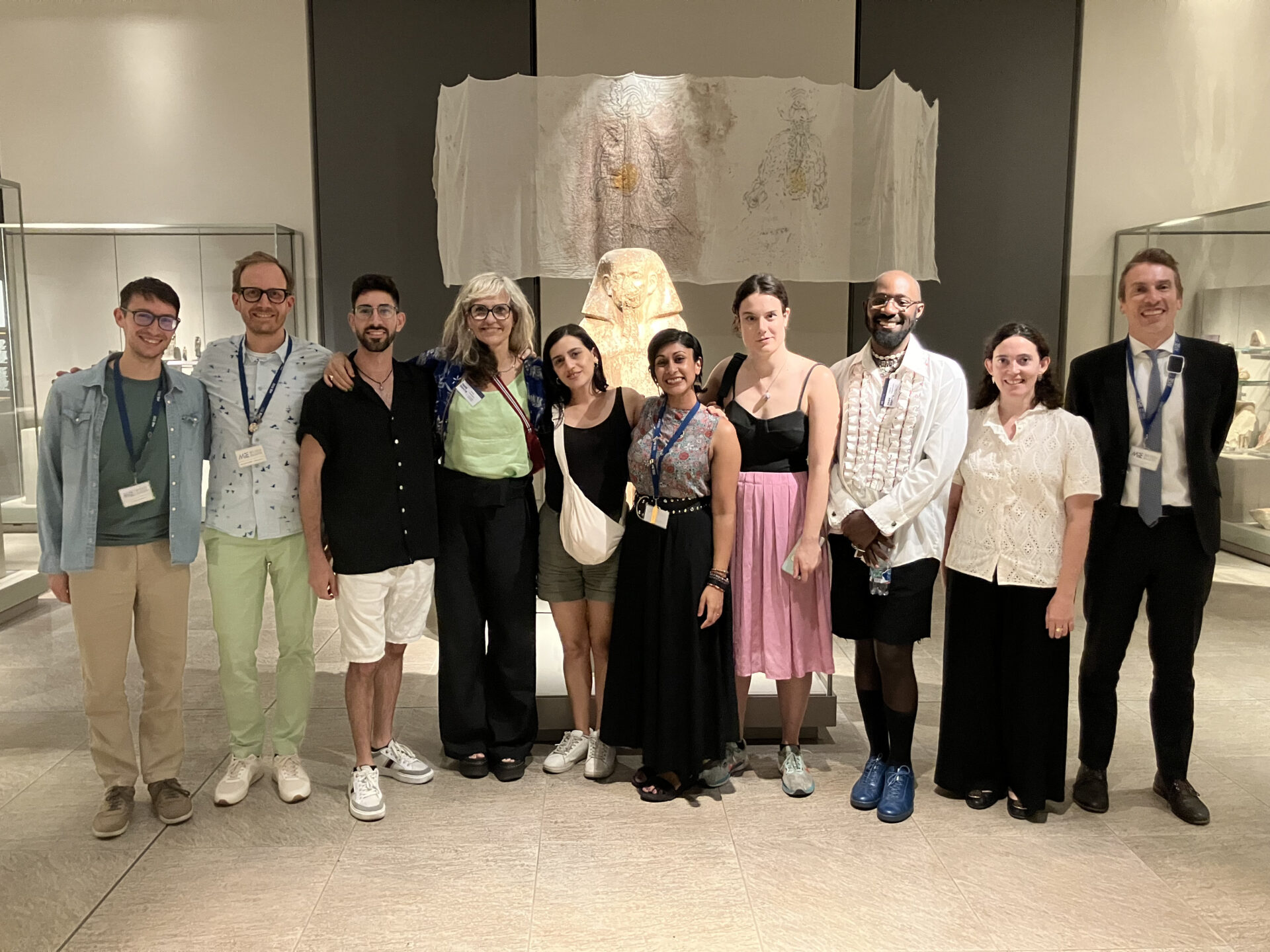
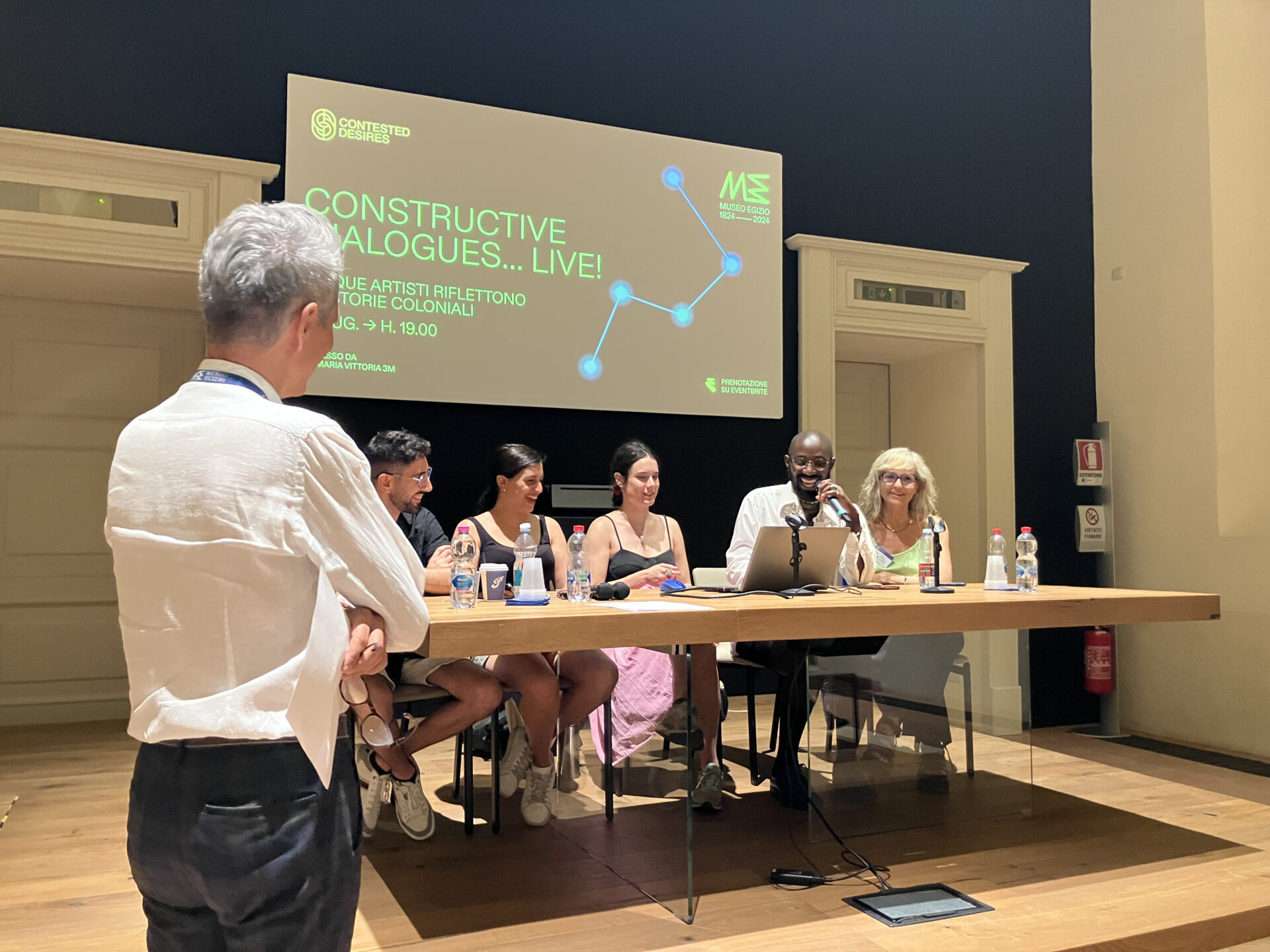
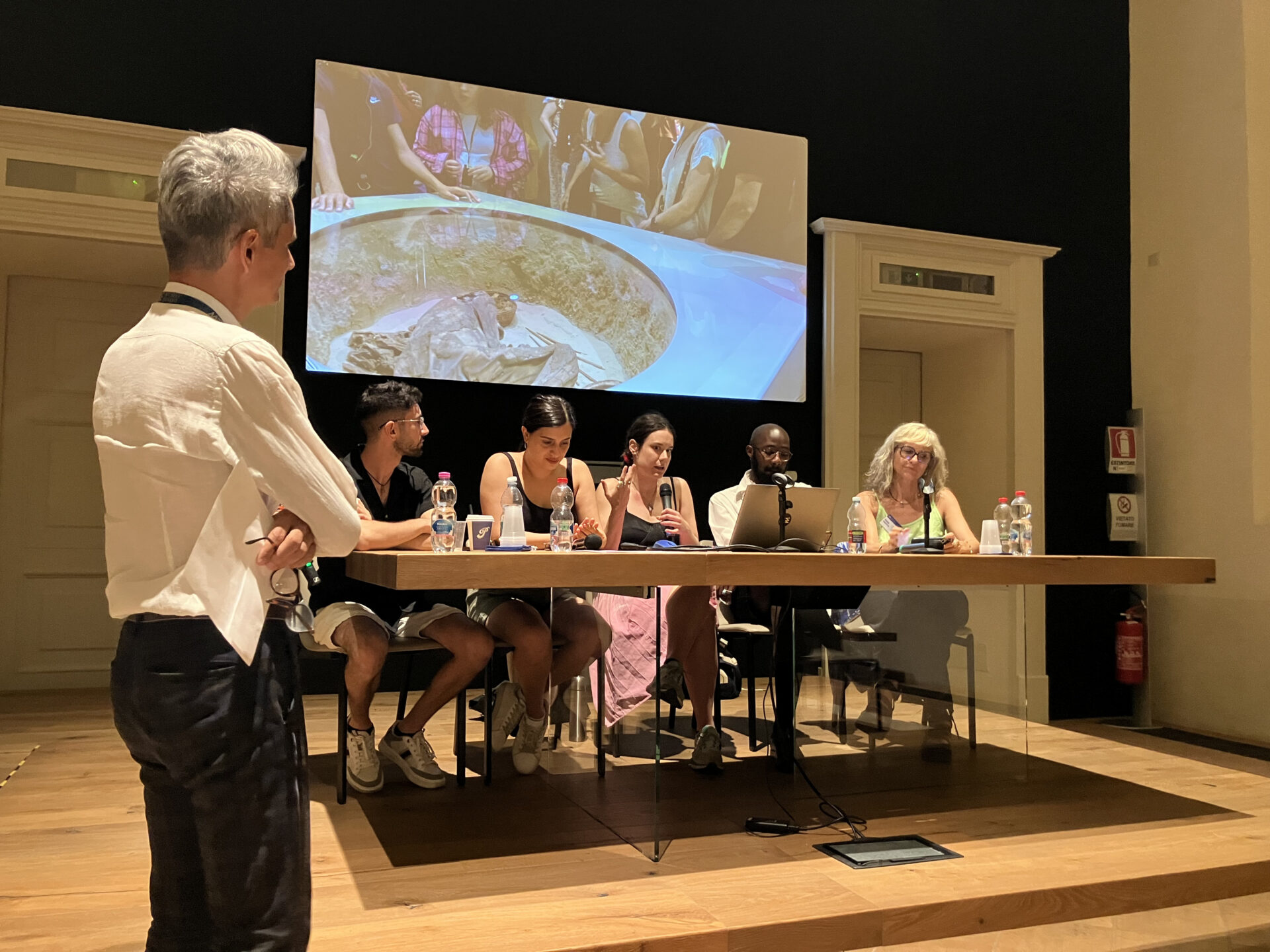
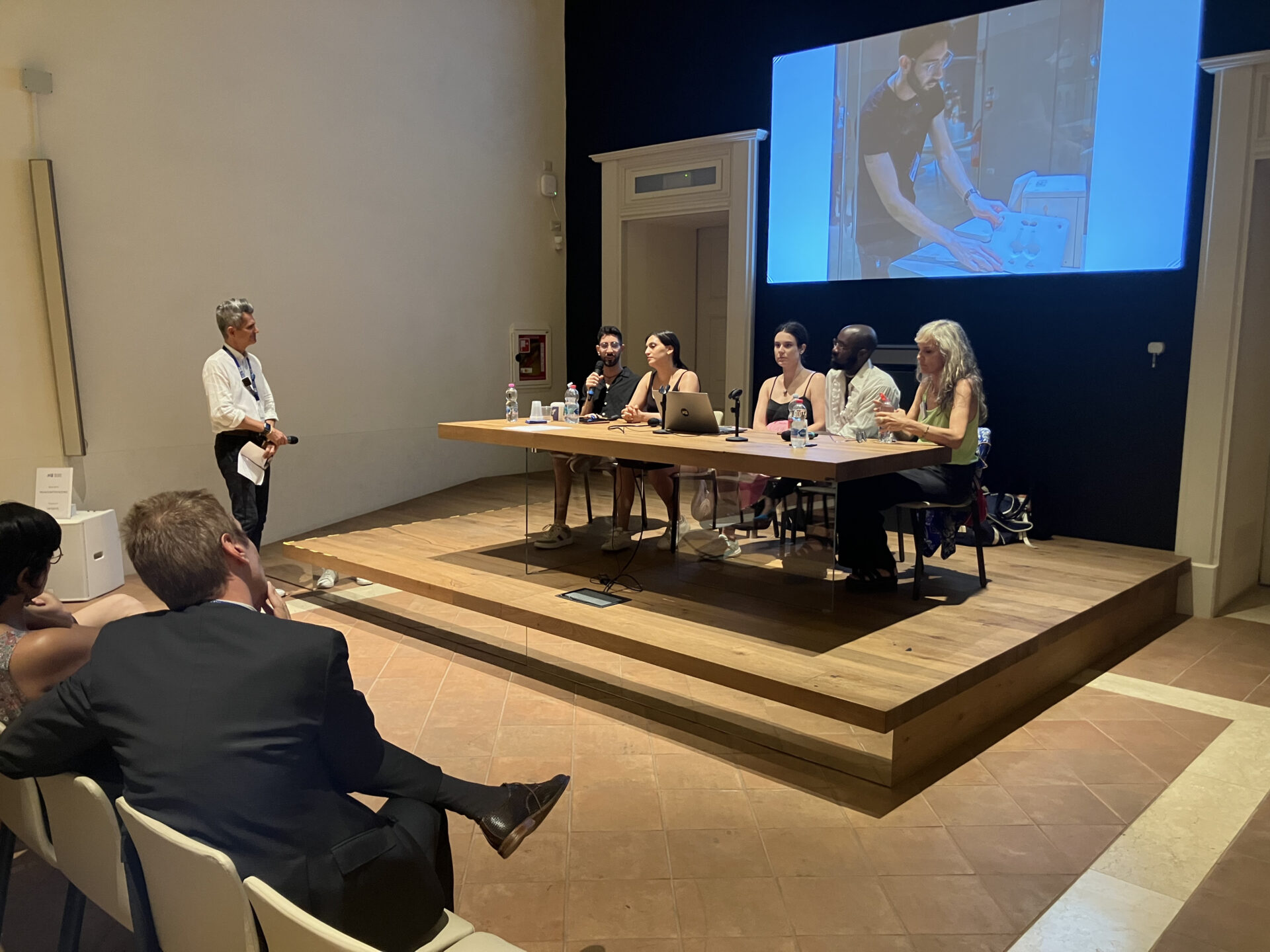
In July 2025, Museo Egizio in Turin welcomed Contested Desires artists Nicolas Kyrillou, Maya Louhichi, Patrick Ngabonziza, Dorottya Márton and Gloria Oyarzabal for a group residency and exhibition.
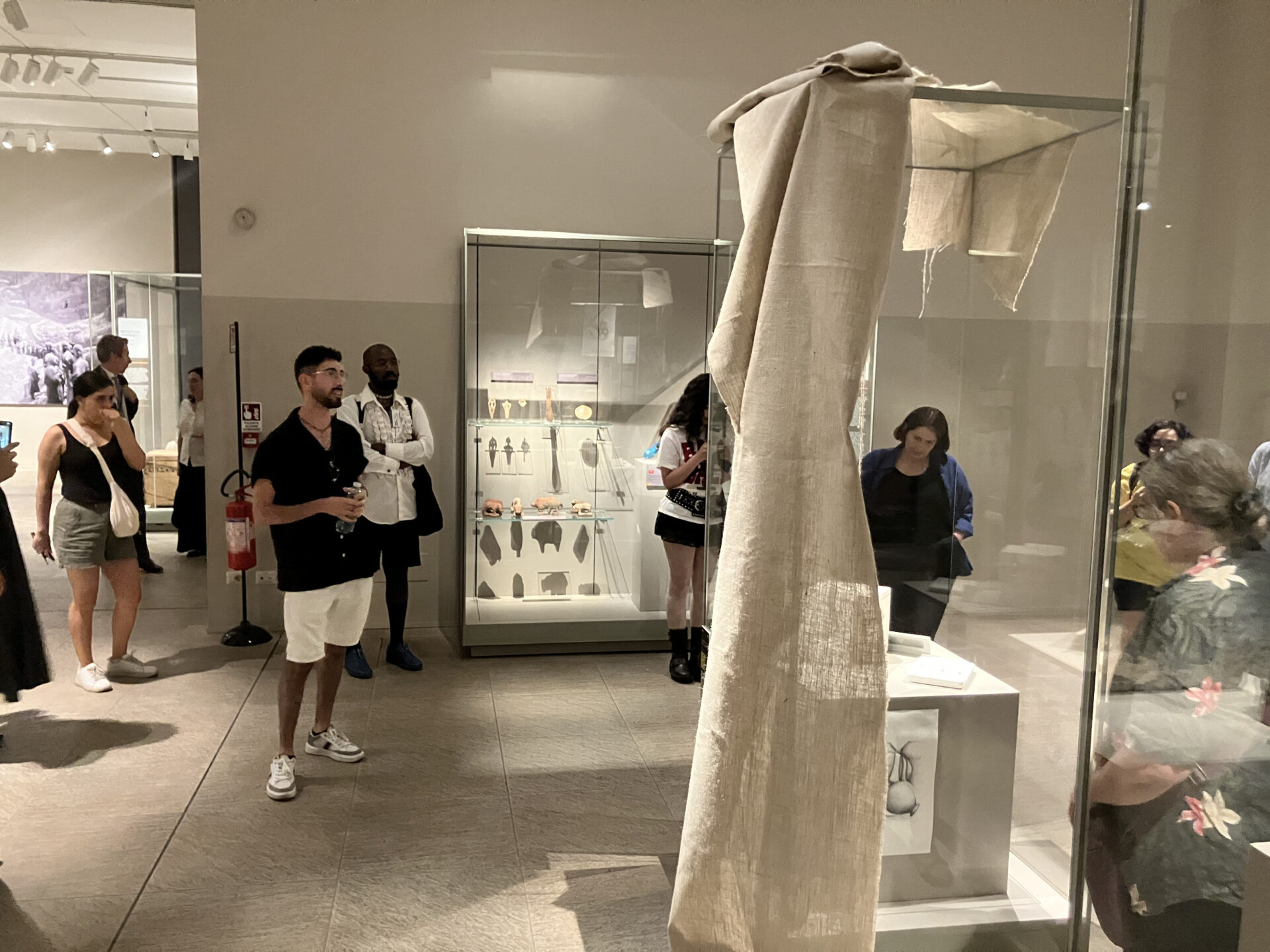
Nicolas Kyrillou — Show-Case
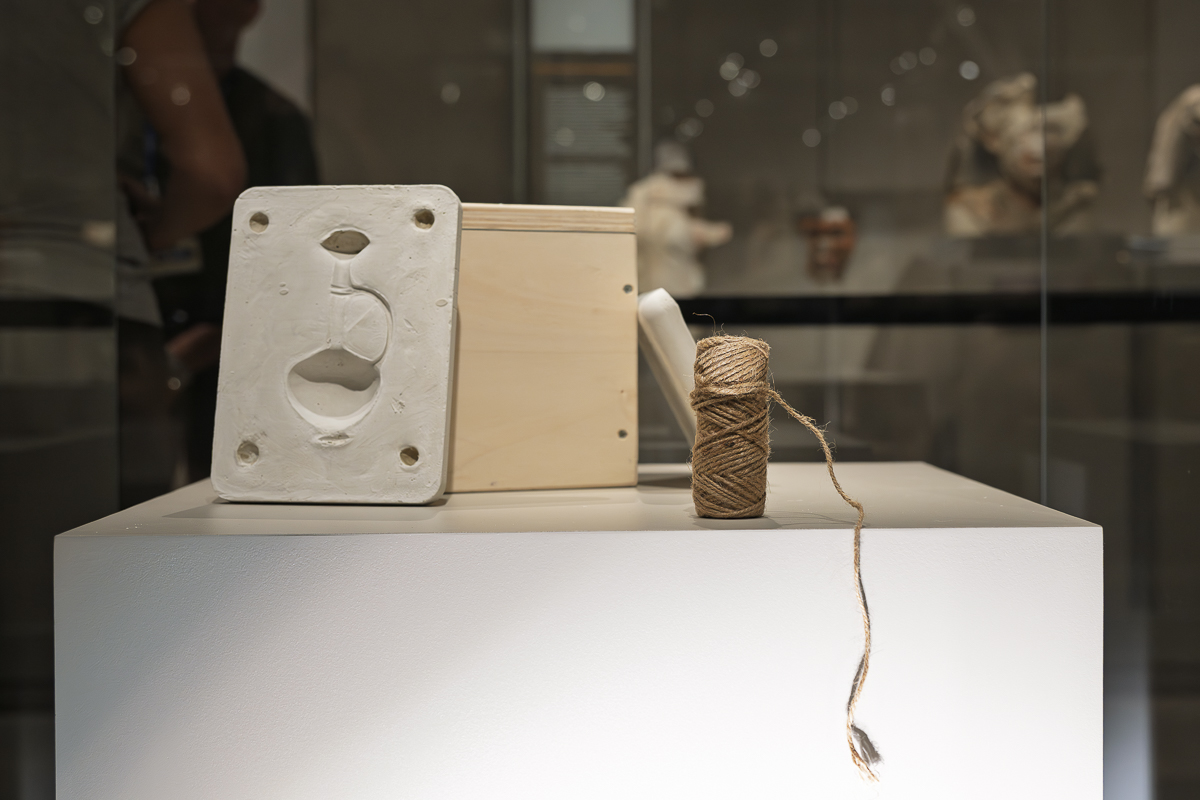
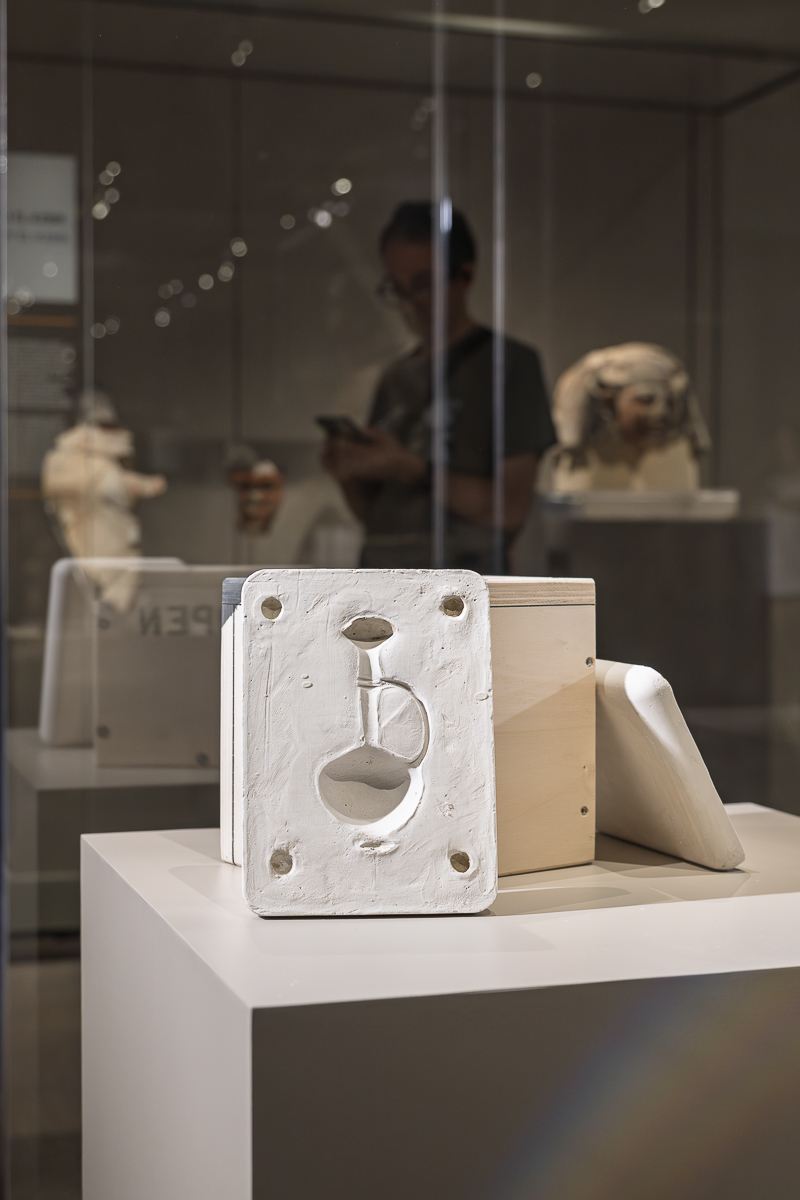
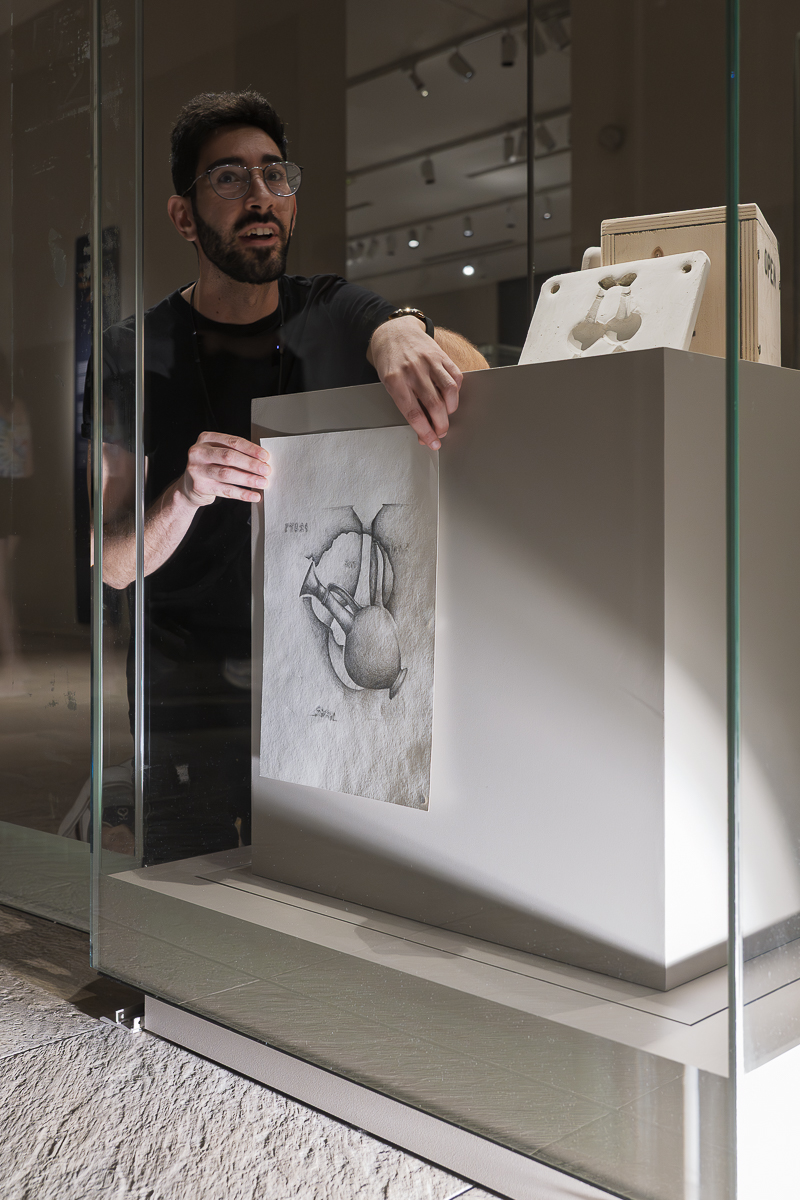
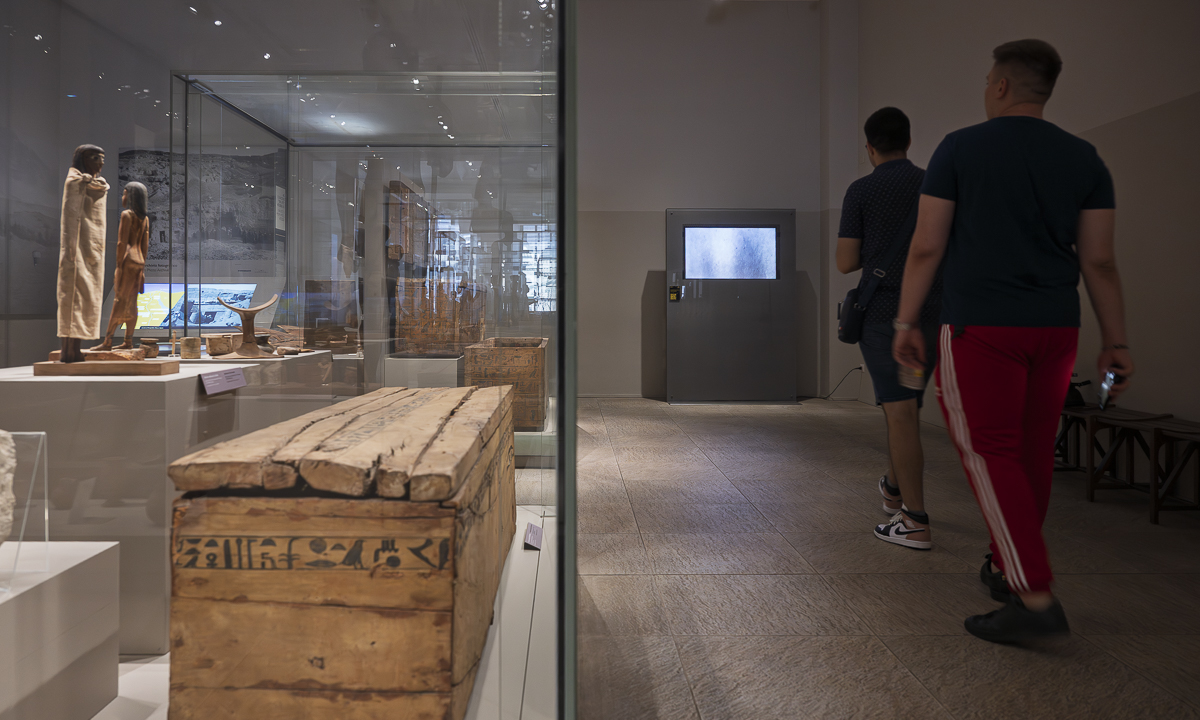
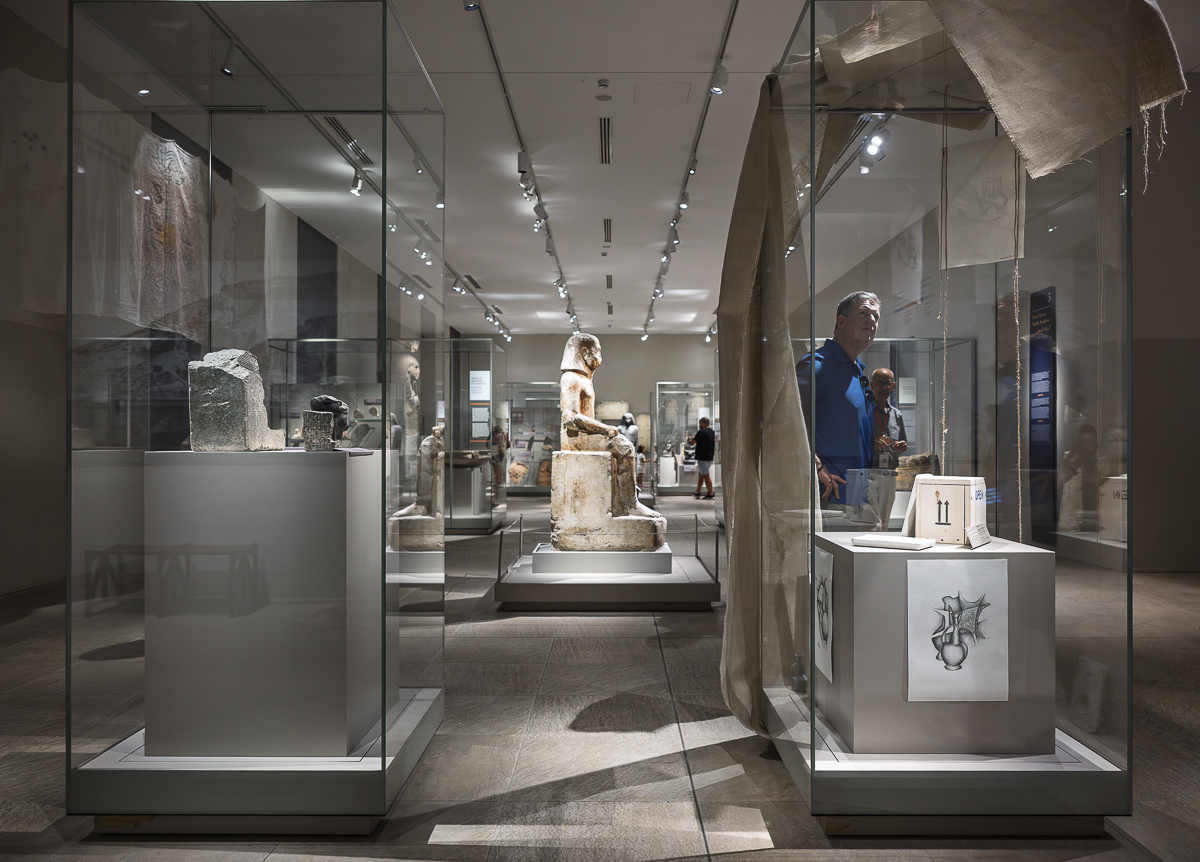
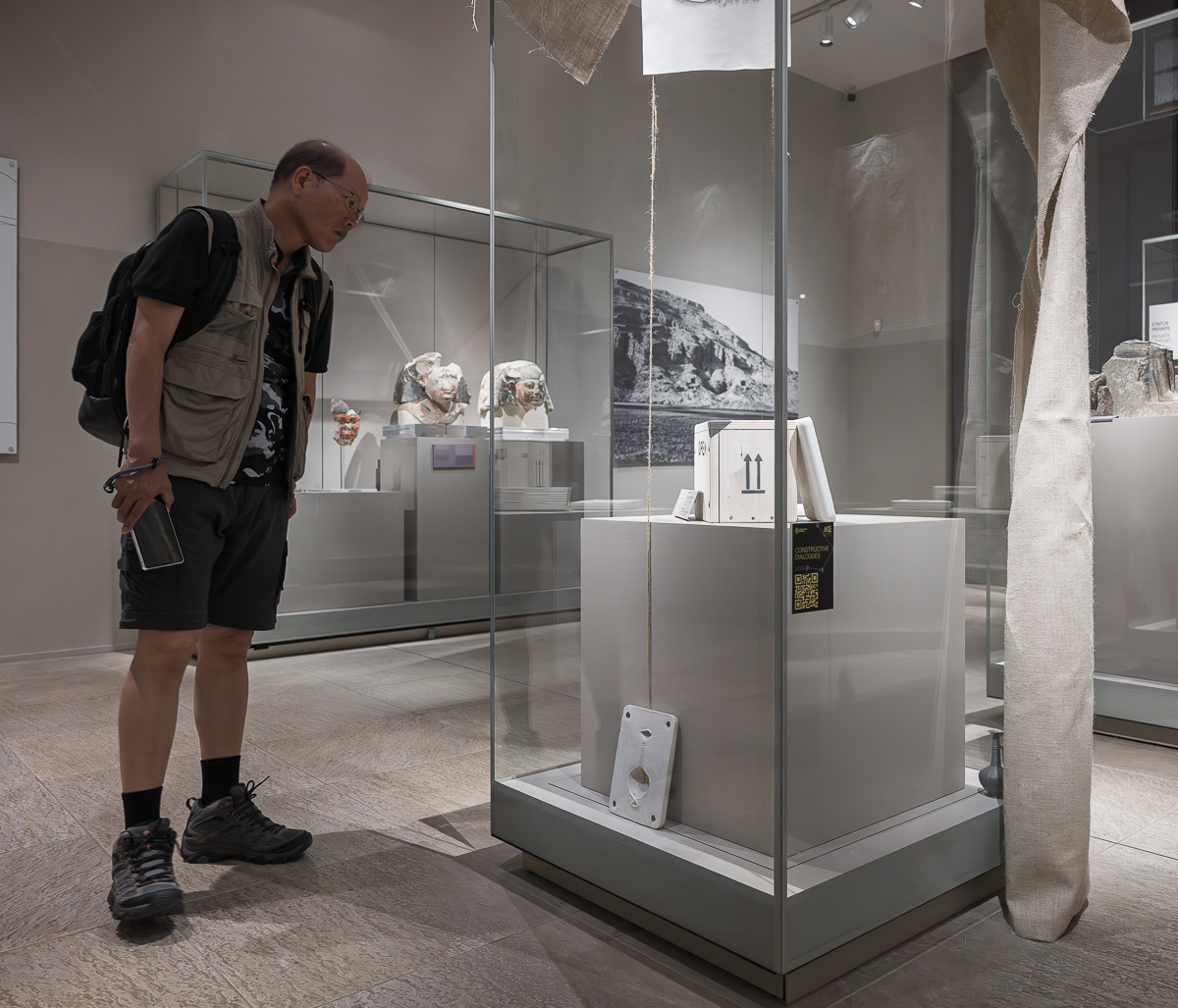
During his residency at Museo Egizio, Nicolas Kyrillou developed Show-Case, an installation reflecting on how museum displays both reveal and conceal meaning. Drawing inspiration from the historical relationship between Egypt and Alashiya (ancient Cyprus), he explored questions of absence, memory, and restitution. Using object moulds, rough textiles, and drawings, Kyrillou created a dialogue between what is shown and what remains hidden, inviting viewers to reflect on ownership and the ethics of display. The work also speaks to Cyprus’s complex colonial history and its enduring connections with Egypt, transforming the showcase into a metaphor for visibility, control, and loss. Installed within the galleries of the Middle Kingdom, Show-Case echoed the themes of decolonisation central to the residency, prompting visitors to consider how institutional narratives shape cultural memory. Kyrillou’s critical gesture revealed the emotional and political layers embedded in museum practices.
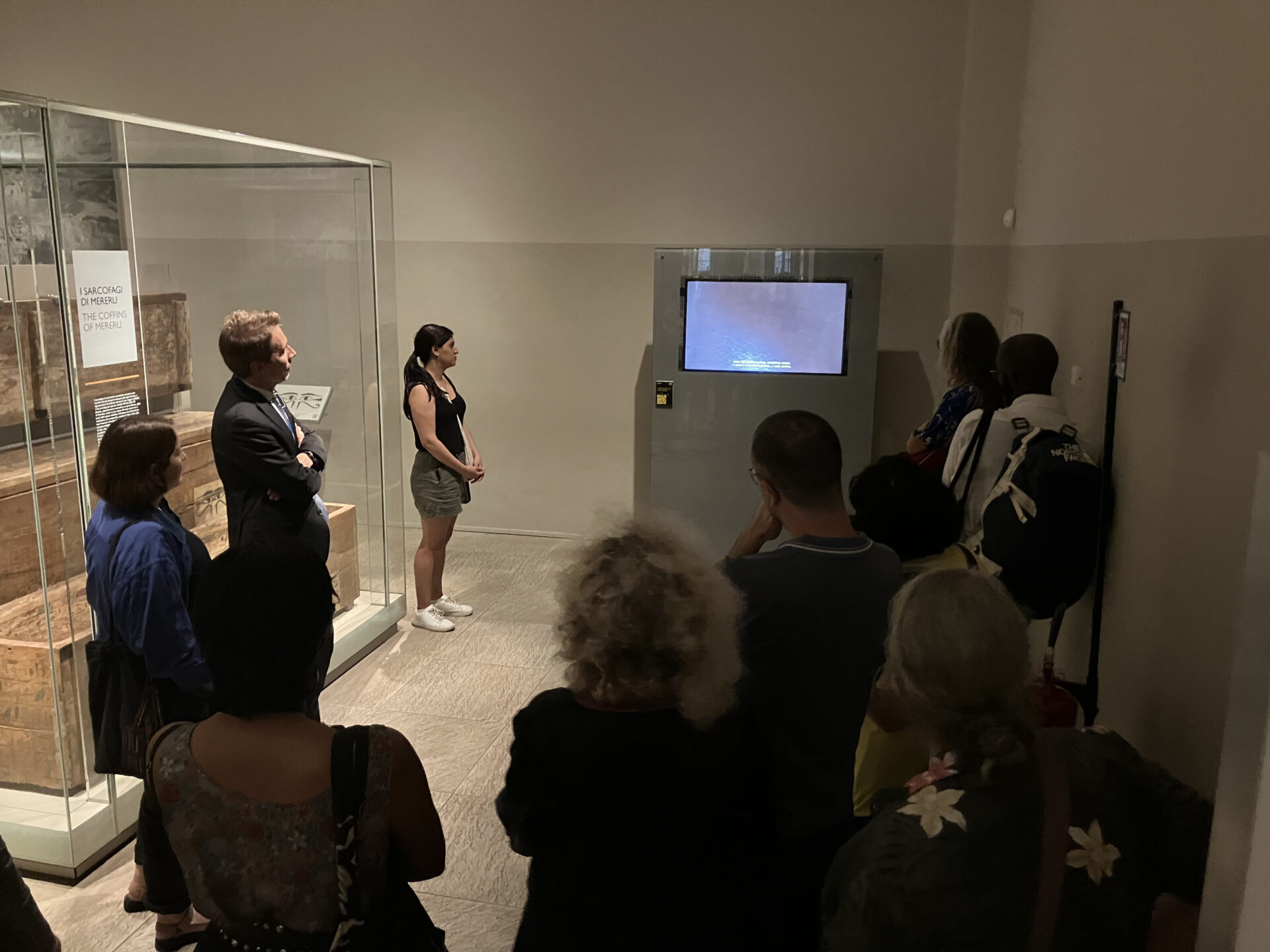
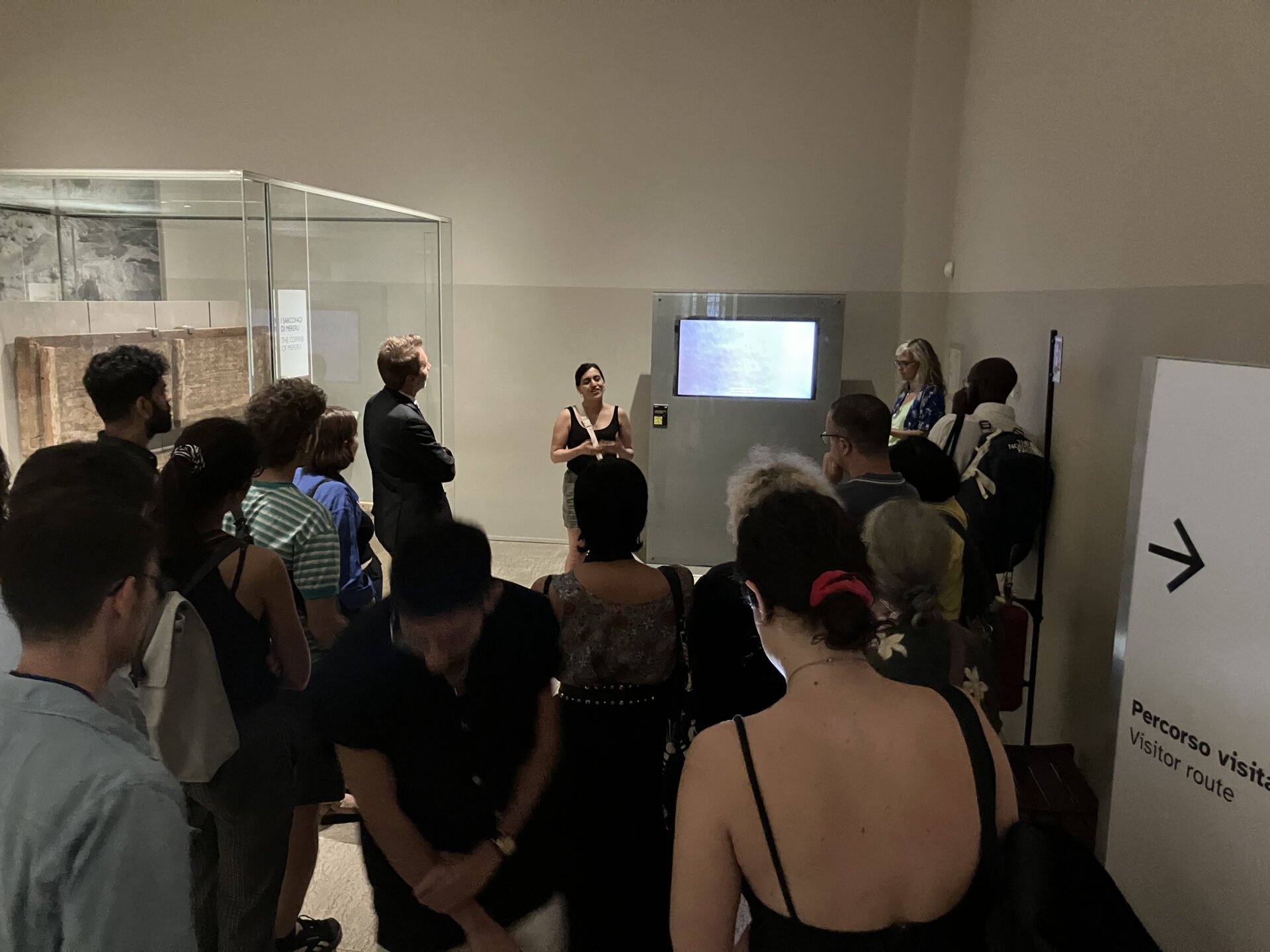
Maya Louhichi — It Was Not the Colour
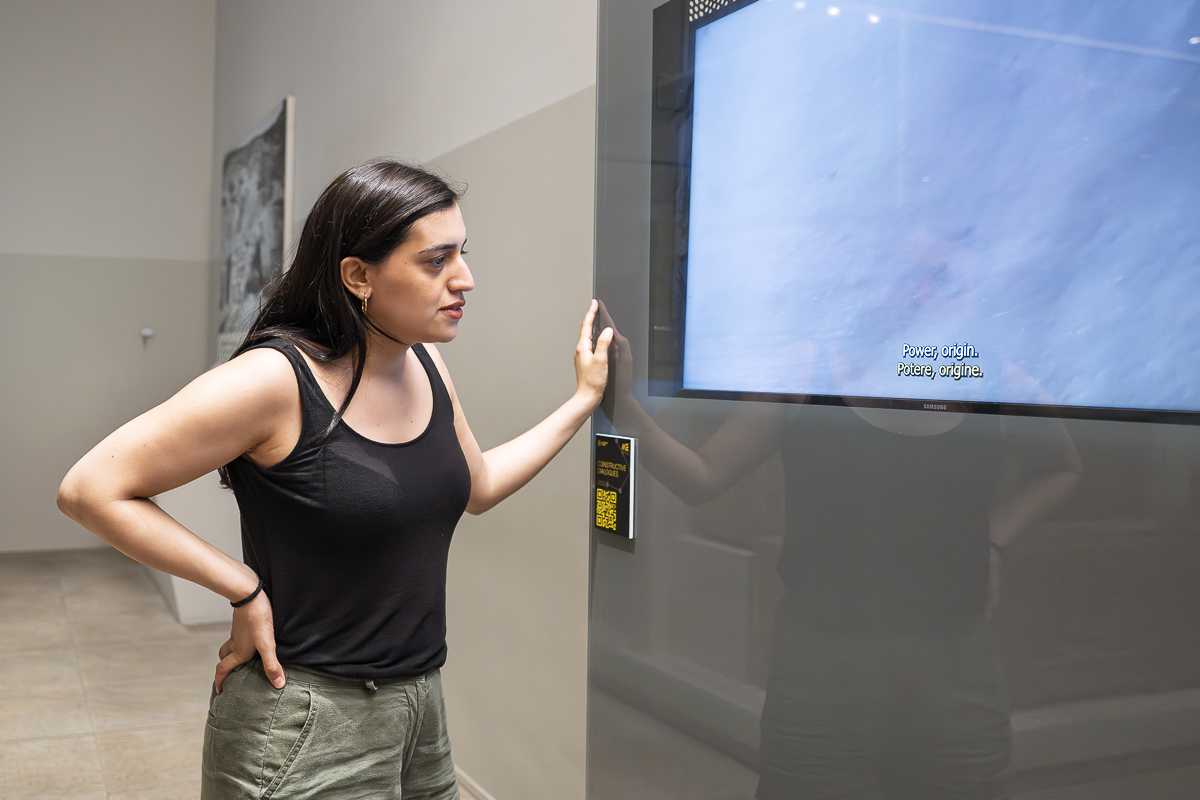
Maya Louhichi’s It Was Not the Colour is a contemplative video work exploring the politics of skin and the historical construction of beauty. During her residency at Museo Egizio, Louhichi drew inspiration from the ancient Egyptian concept of Kemet—the Black Land—where black symbolised fertility and vitality, not hierarchy. Through intimate close-ups of skin in varied tones, she invited viewers to rethink how colour, heritage, and identity are perceived today. The work contrasts ancient representations, where difference was not racialised, with contemporary beauty norms shaped by colonial legacies. Developed in dialogue with the museum’s collection and curatorial team, the project foregrounds the importance of re-examining aesthetic standards through a postcolonial lens. Louhichi’s installation encouraged visitors to reflect on how cultural narratives around skin and beauty continue to influence our ways of seeing, offering a quiet but incisive act of resistance within the museum context.
Patrick Ngabonziza — Breathing Stela
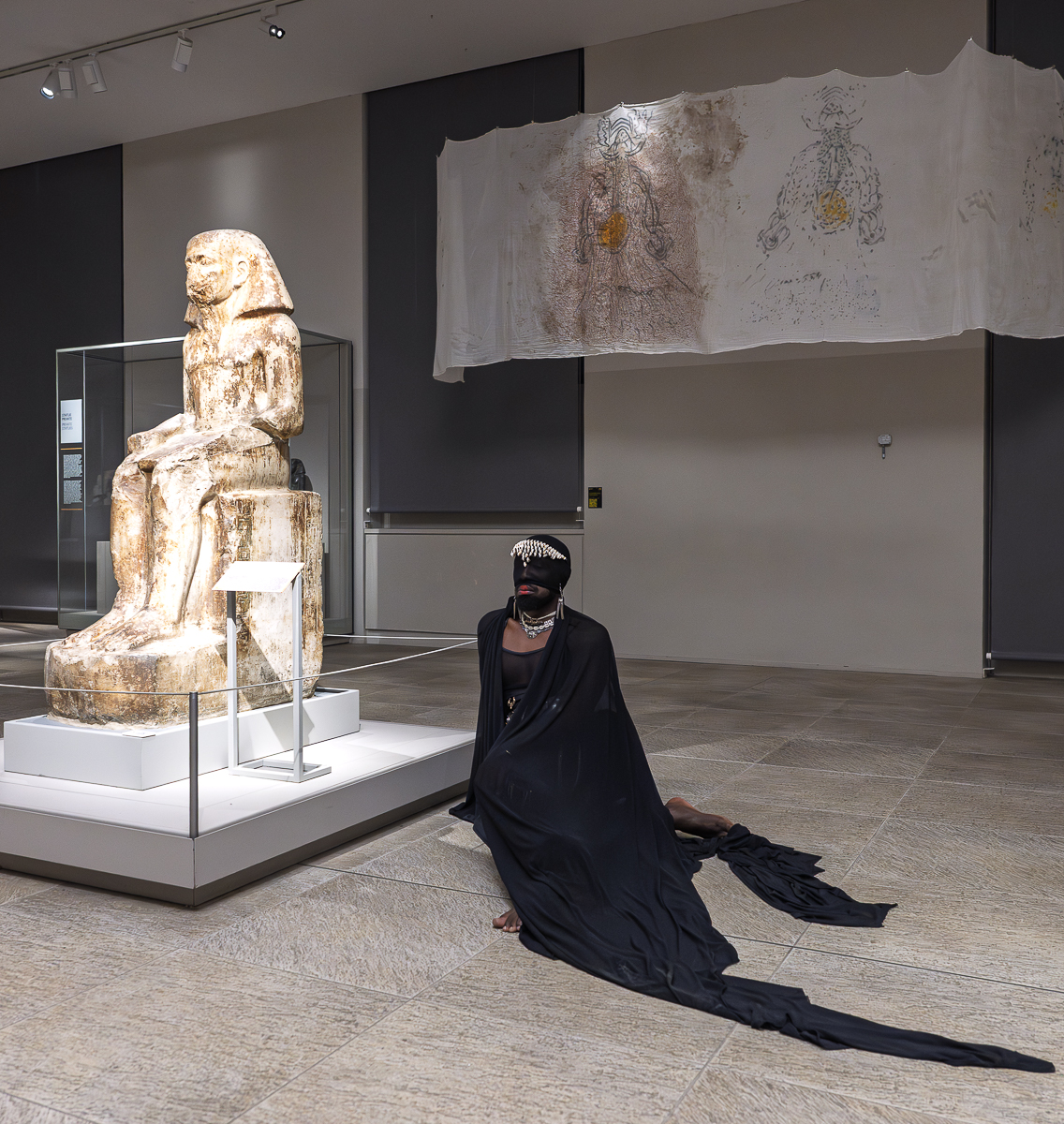
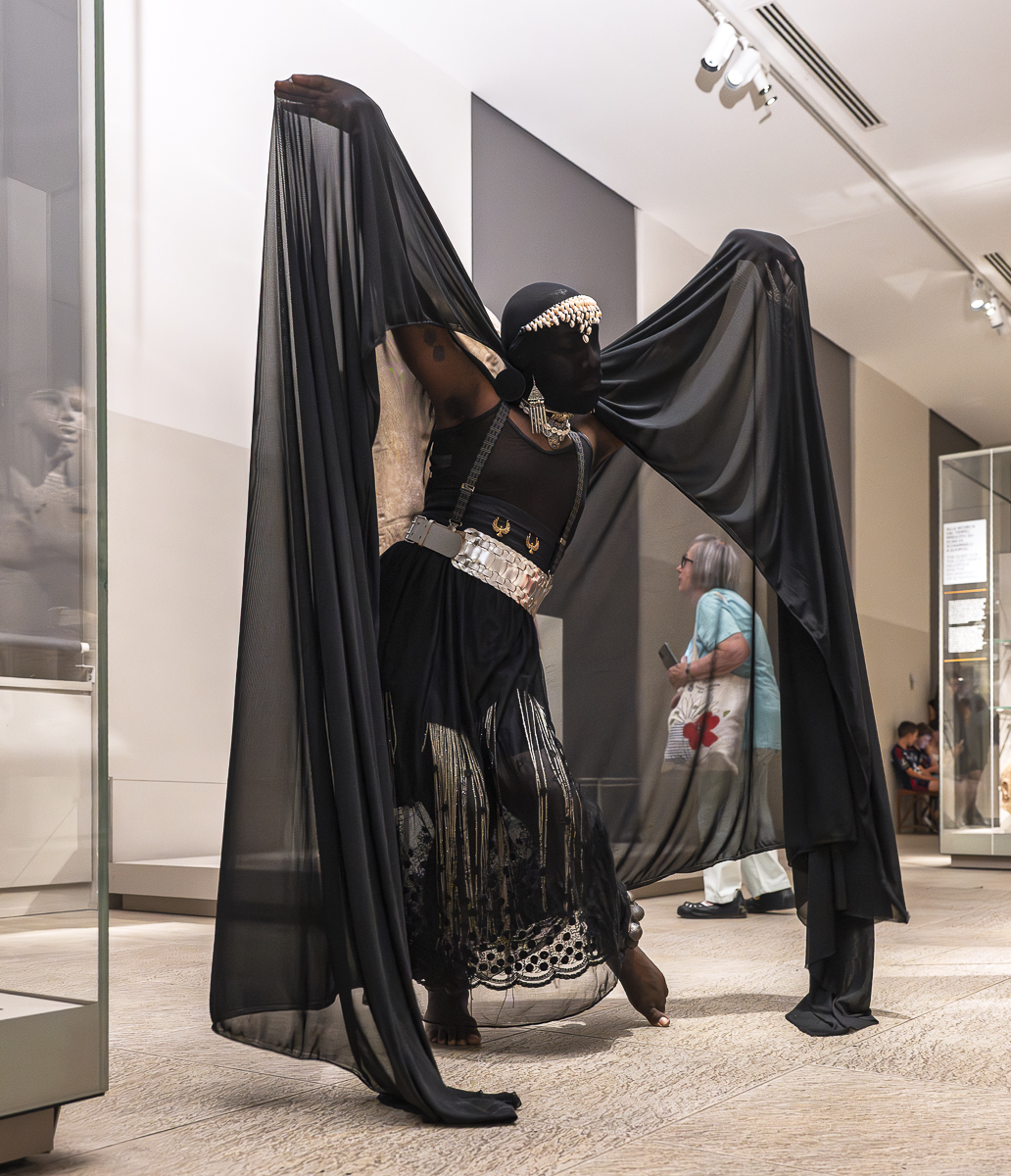
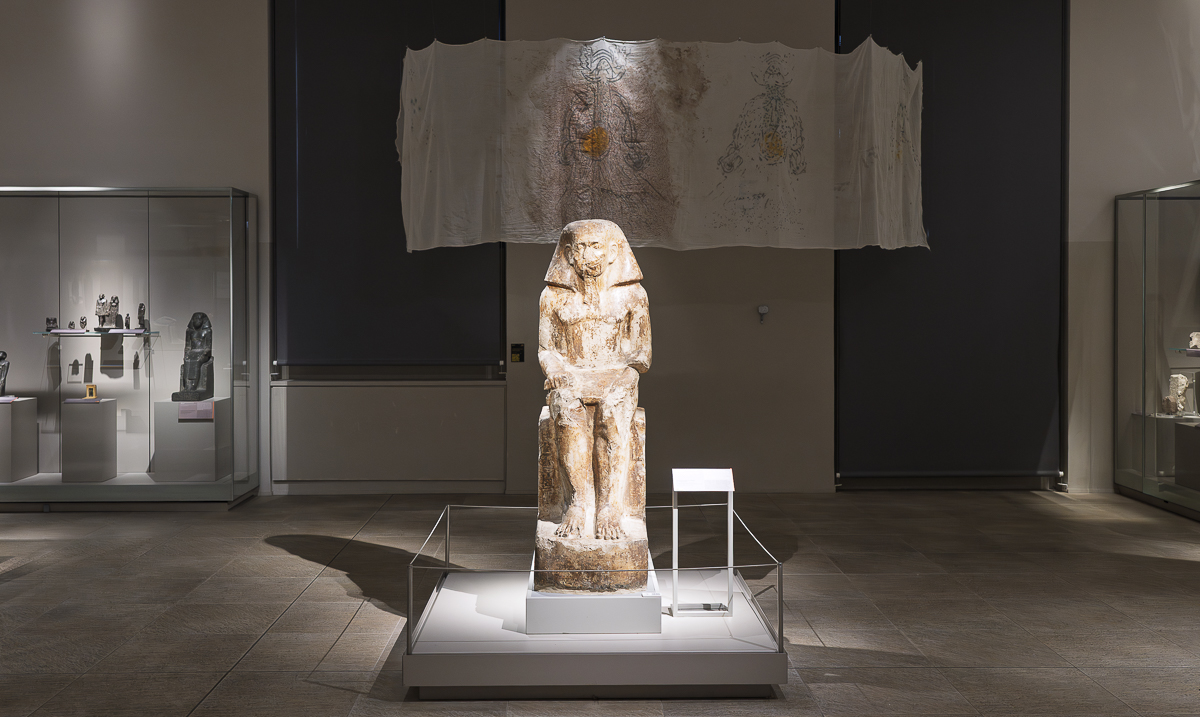
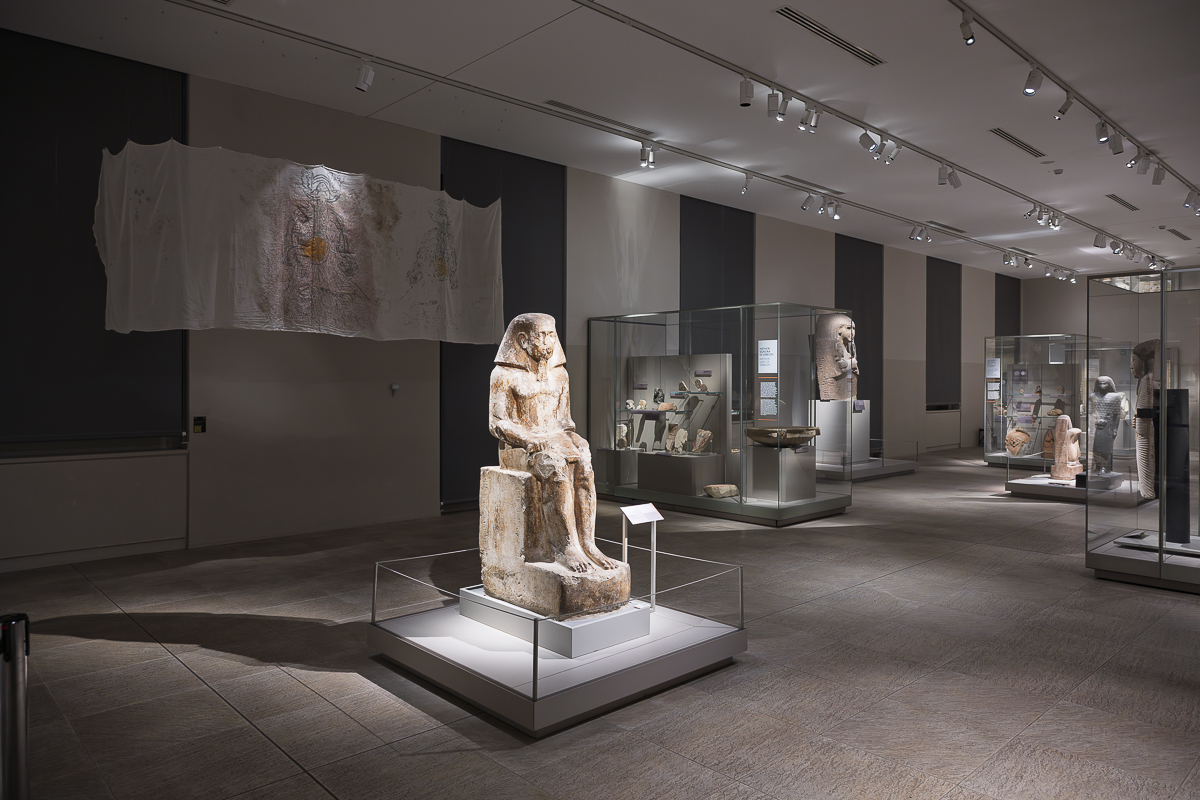
During his residency at Museo Egizio, Patrick Ngabonziza created Breathing Stela, a large-scale hand-painted textile work that reinterprets 19th-century European narratives about Ancient Egypt. Drawing from historical texts by Champollion, Shelley, and Giulio Cordero di San Quintino, the artist explored how early archaeological discourse reflected Europe’s imperial fascination with Egypt. Combining natural pigments—charcoal, indigo, red clay, turmeric, and walnut crystals—with performance, Ngabonziza gave voice to displaced histories and embodied memory. His work questioned the ways monuments and artefacts have been extracted, relocated, and recontextualised, raising critical reflections on power, possession, and historical representation. The performance within the museum created a powerful dialogue between movement and stillness, presence and absence. By reanimating archival voices and situating them within the museum’s colonial legacy, Breathing Stela offered a poignant critique of how history is told—and who gets to tell it.
Dorottya Márton
During her residency at Museo Egizio, Dorottya Márton explored the shifting relationship between life, death, and spirituality in contemporary societies. Her film project, developed through interviews with museum visitors, asked simple yet profound questions—Where is the soul? Where does it go? What is it, really?—inviting participants to reflect on the distance between modern life and ancient understandings of mortality. By weaving these anonymous testimonies with visual imagery of historical death rituals, Márton revealed how colonial histories and secularised modernity have fractured our connection to the spiritual realm. The work juxtaposed the silence surrounding death in today’s culture with the symbolic richness of ancient Egyptian funerary practices. Within the museum’s setting, it became both an act of listening and of reclaiming a language for the soul—highlighting the need to reimagine our relationship with mortality, ancestry, and the unseen.
Gloria Oyarzabal — DIDASCALÍA
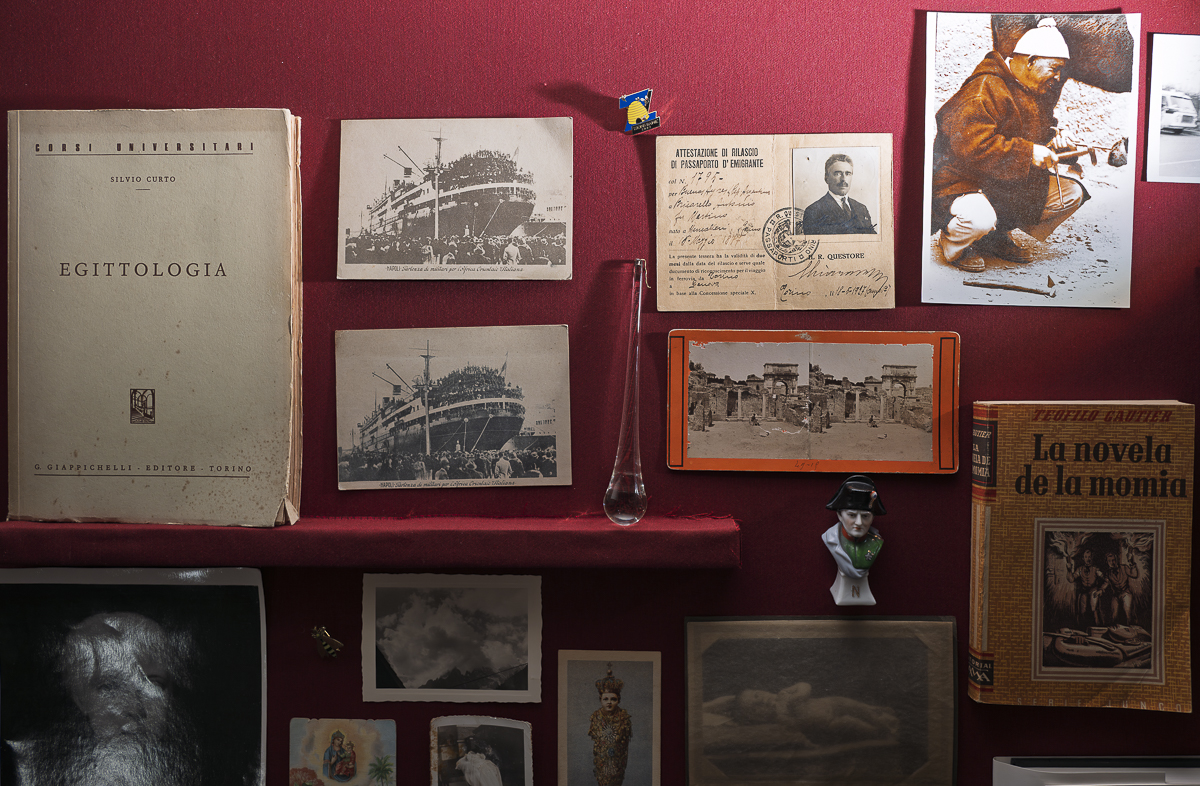
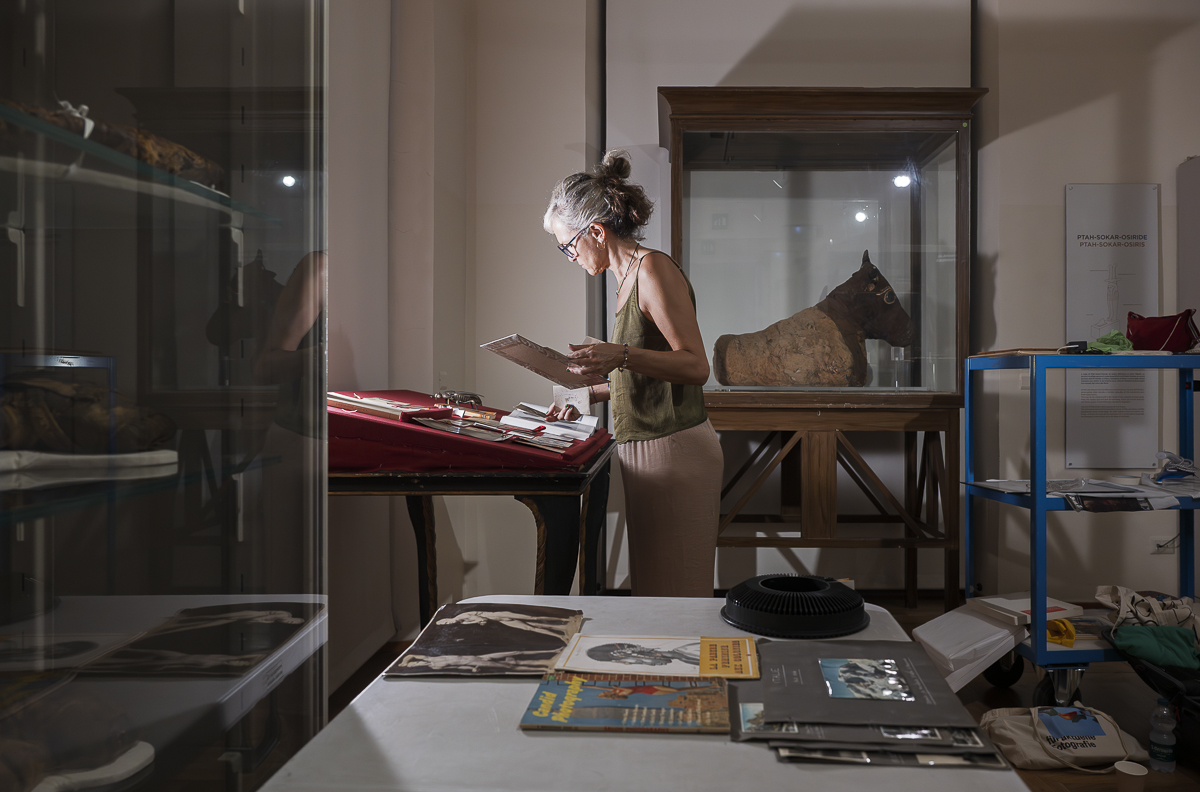
During her residency at Museo Egizio, Gloria Oyarzabal developed DIDASCALÍA (διδασκαλία), a research-based installation examining how museums construct and transmit knowledge. Taking its title from the Ancient Greek word for ‘instruction’, the work reflects on how historical narratives are shaped by power, ideology, and colonial legacies. Drawing from philosophical texts, archival materials, and museological debates, Oyarzabal questioned the Eurocentric frameworks that continue to define cultural institutions. Her installation integrated found objects from a Turin flea market, photographs, and textual fragments—repurposed materials that echo her critique of historical repetition and selective memory. Central to her reflection was the ethical dilemma surrounding the display of human remains, and how such practices reflect enduring hierarchies between cultures. Through DIDASCALÍA, Oyarzabal invited viewers to reconsider the authority of museums and to imagine new, more inclusive ways of exhibiting, interpreting, and caring for the past.