

Group residency in Budapest
From 31 January to 14 February 2026, Pro Progressione in Budapest hosted a group residency bringing together the artists Rocío Guerrero Marín (Chile), Andreas Mallouris (Cyprus), Sithabile Mlotshwa (The Netherlands), and Carlos Noronha Feio (Portugal) for two weeks of site visits, artwork development, and public exchange.
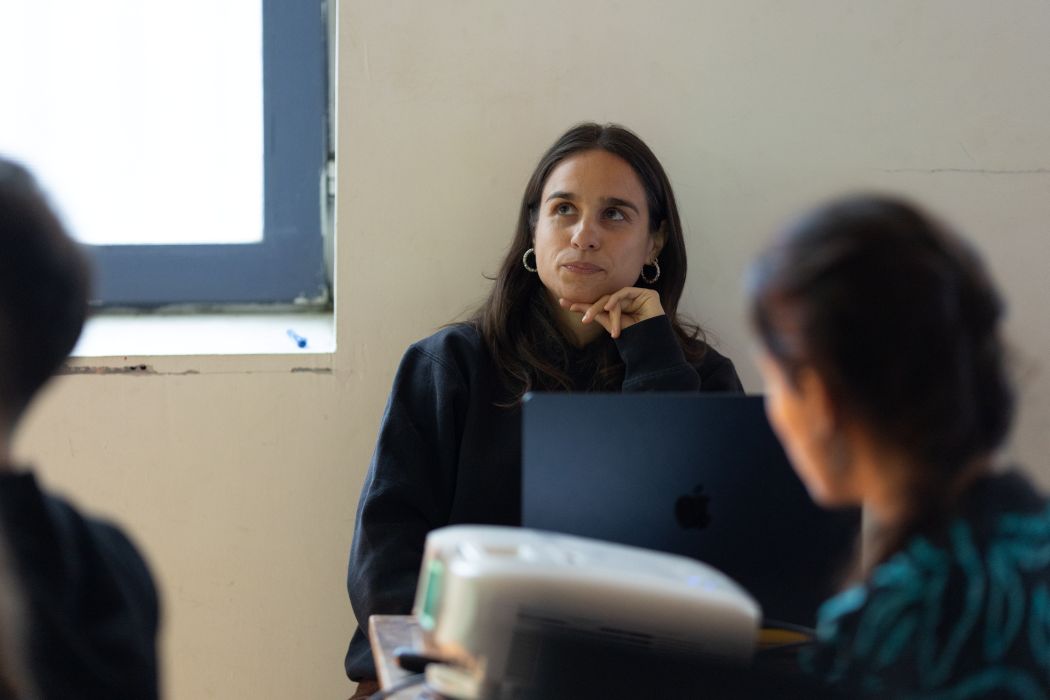
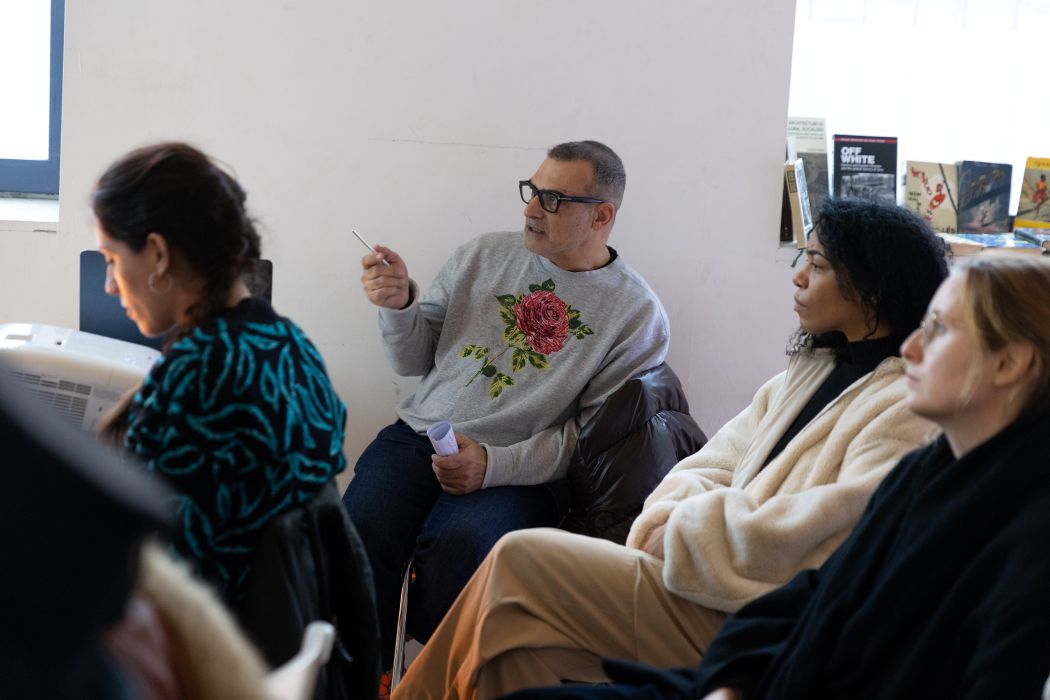
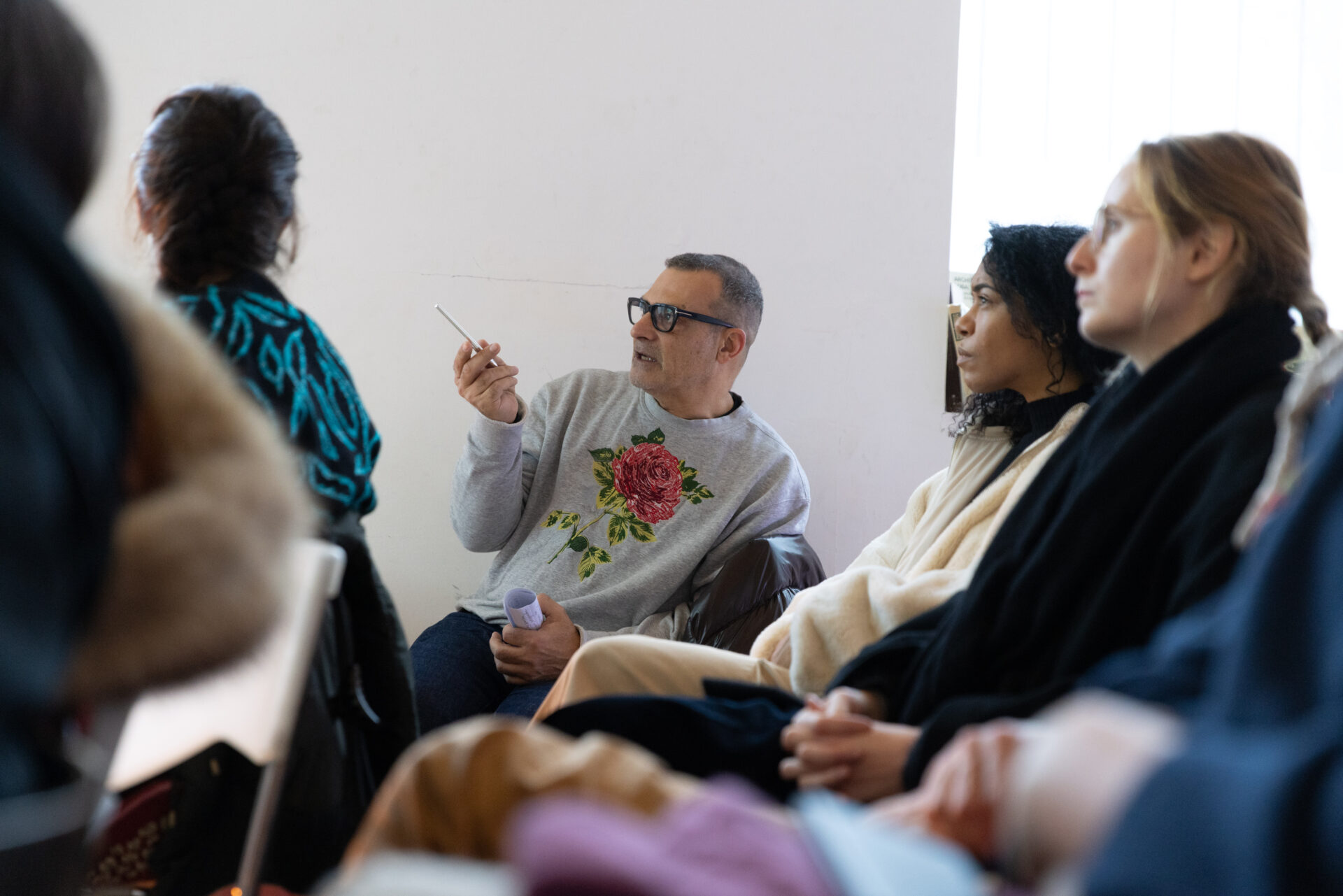
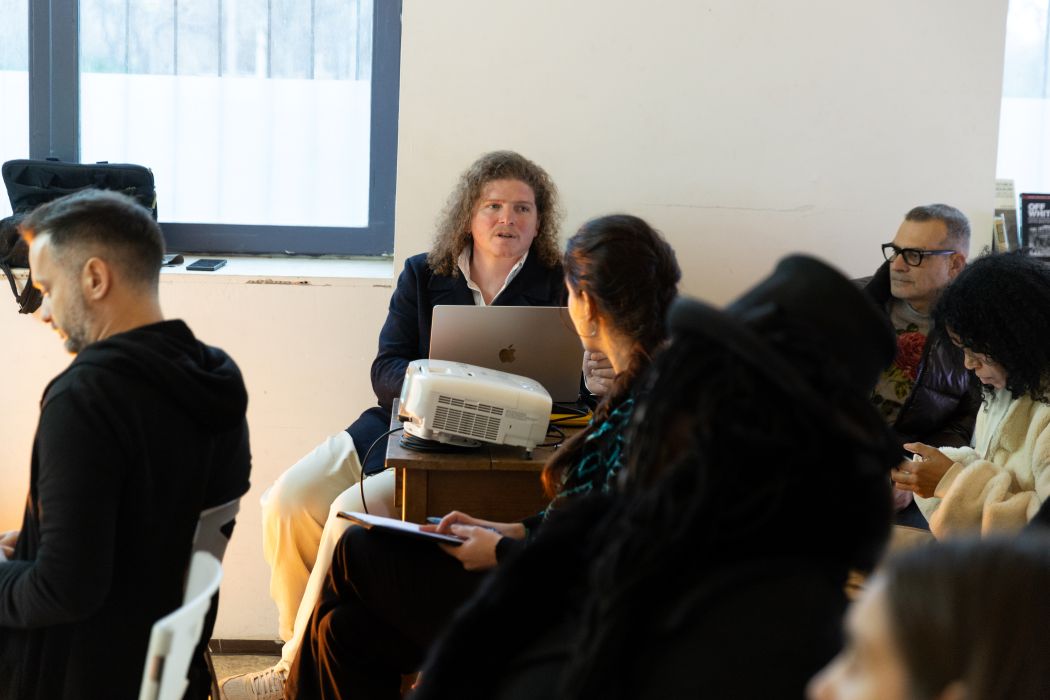
The programme included a guided city tour, networking events, Rocío’s Decolonial Botanical Songbook workshop and artist talk at Lehetőségek Tere, a public event at Dobozi21 on 8 February with artist presentations, a pop-up exhibition, and Zoltán Ginelli’s seminar “Hungary and Colonialism.” Across different media and approaches, the residency opened a shared space for reflecting on colonial memory, identity, listening, repair, and representation, grounding artistic research in the local context and collective encounter.
Rocío Guerrero Marín
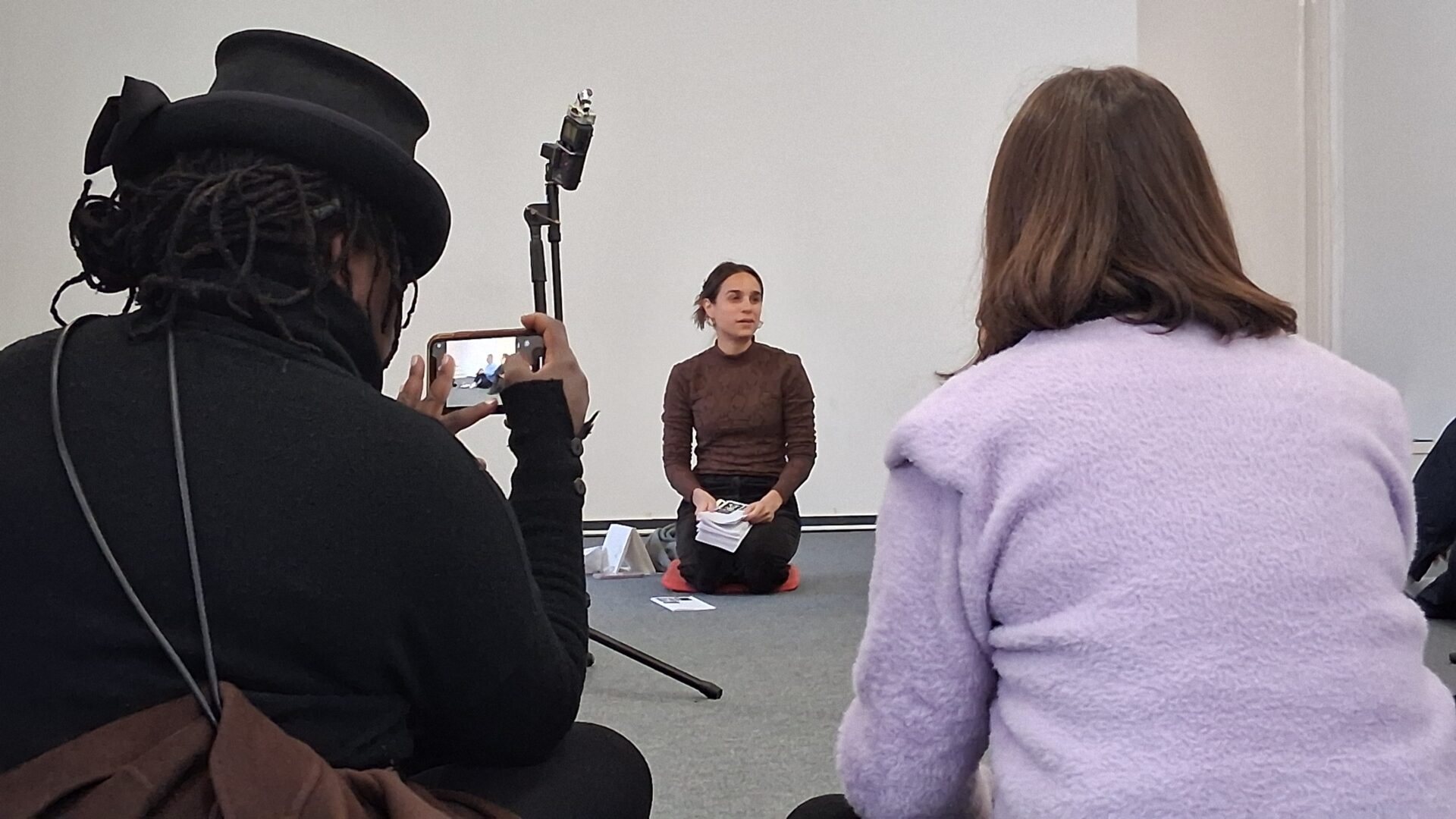
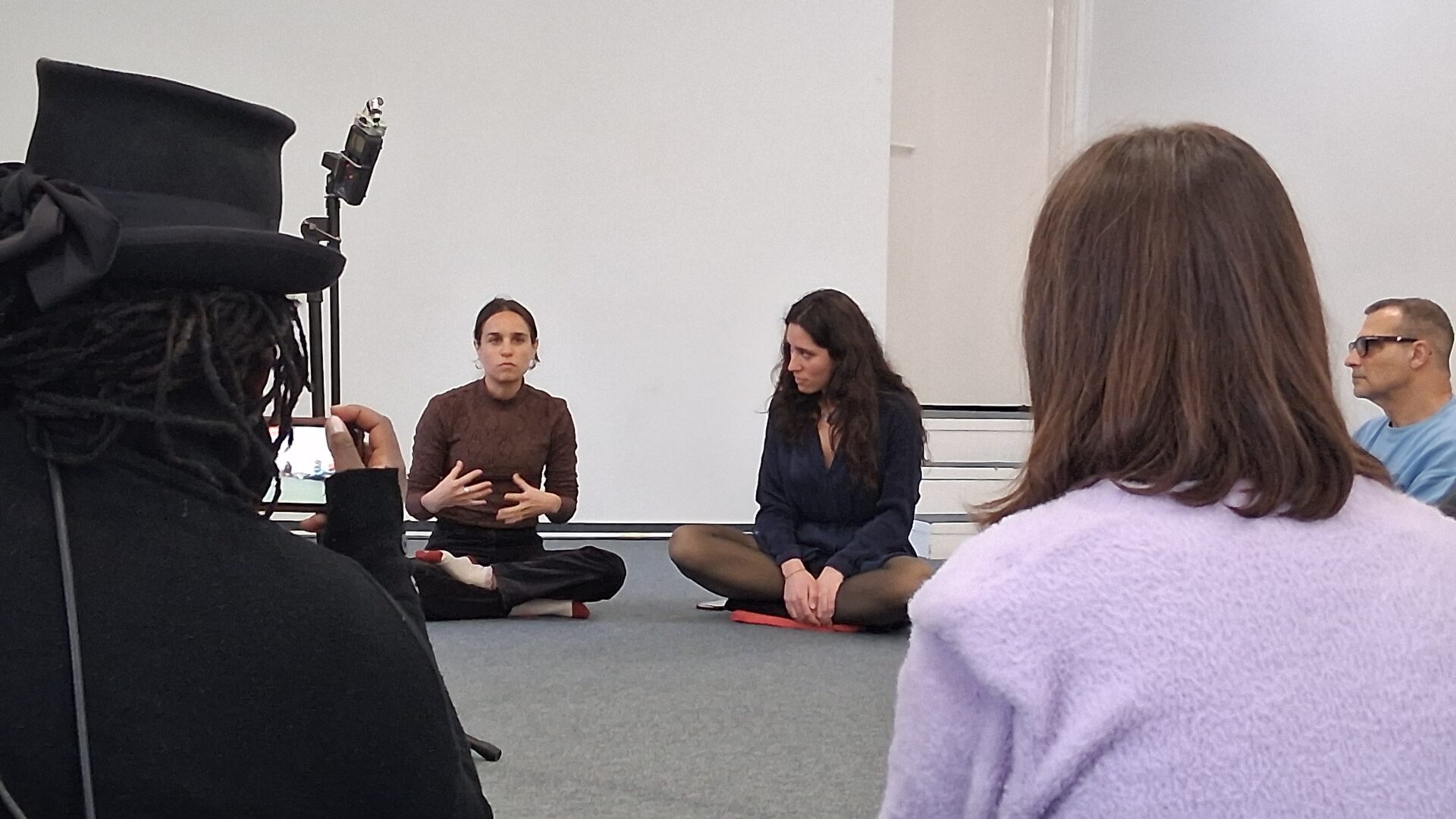
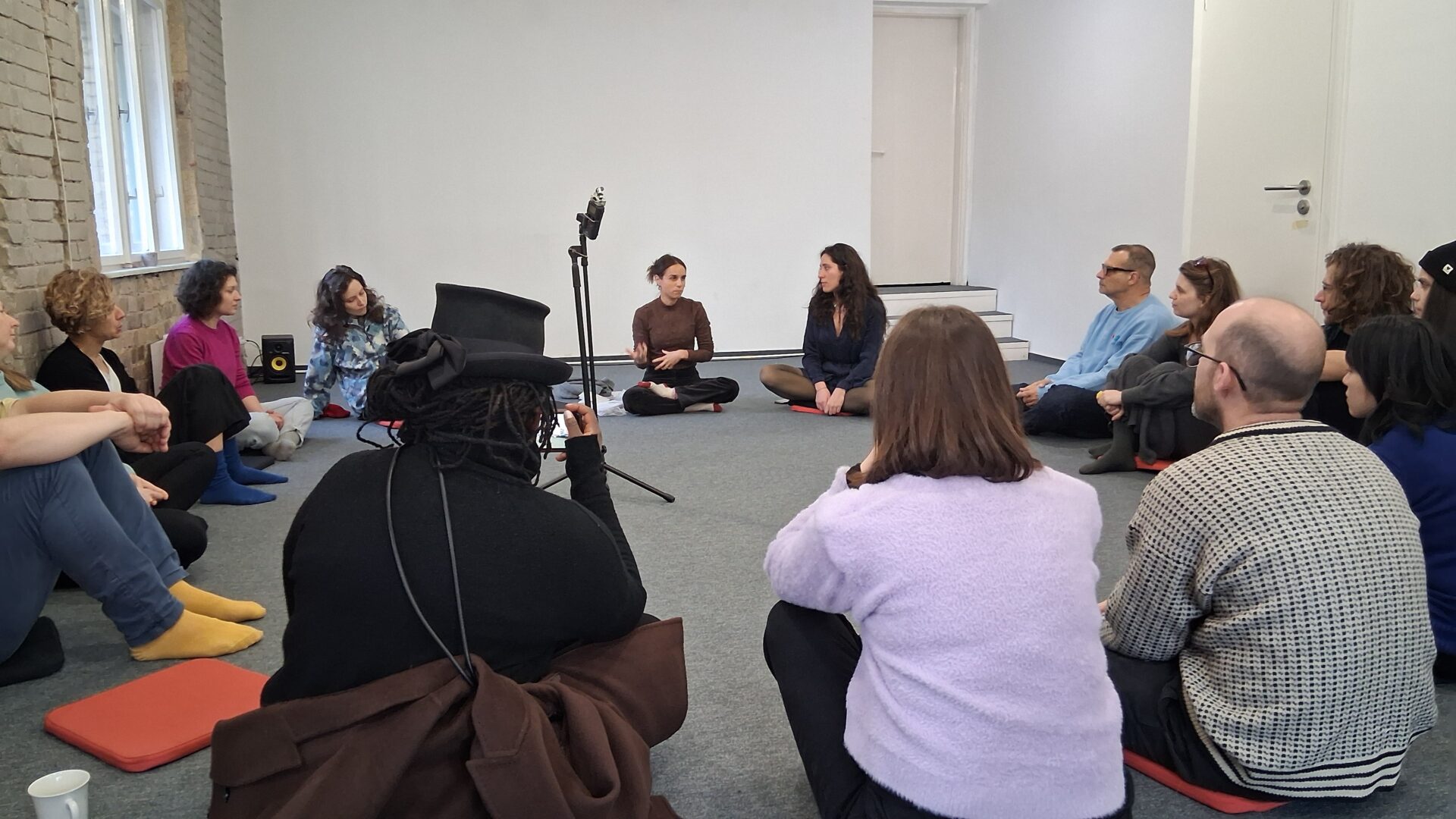
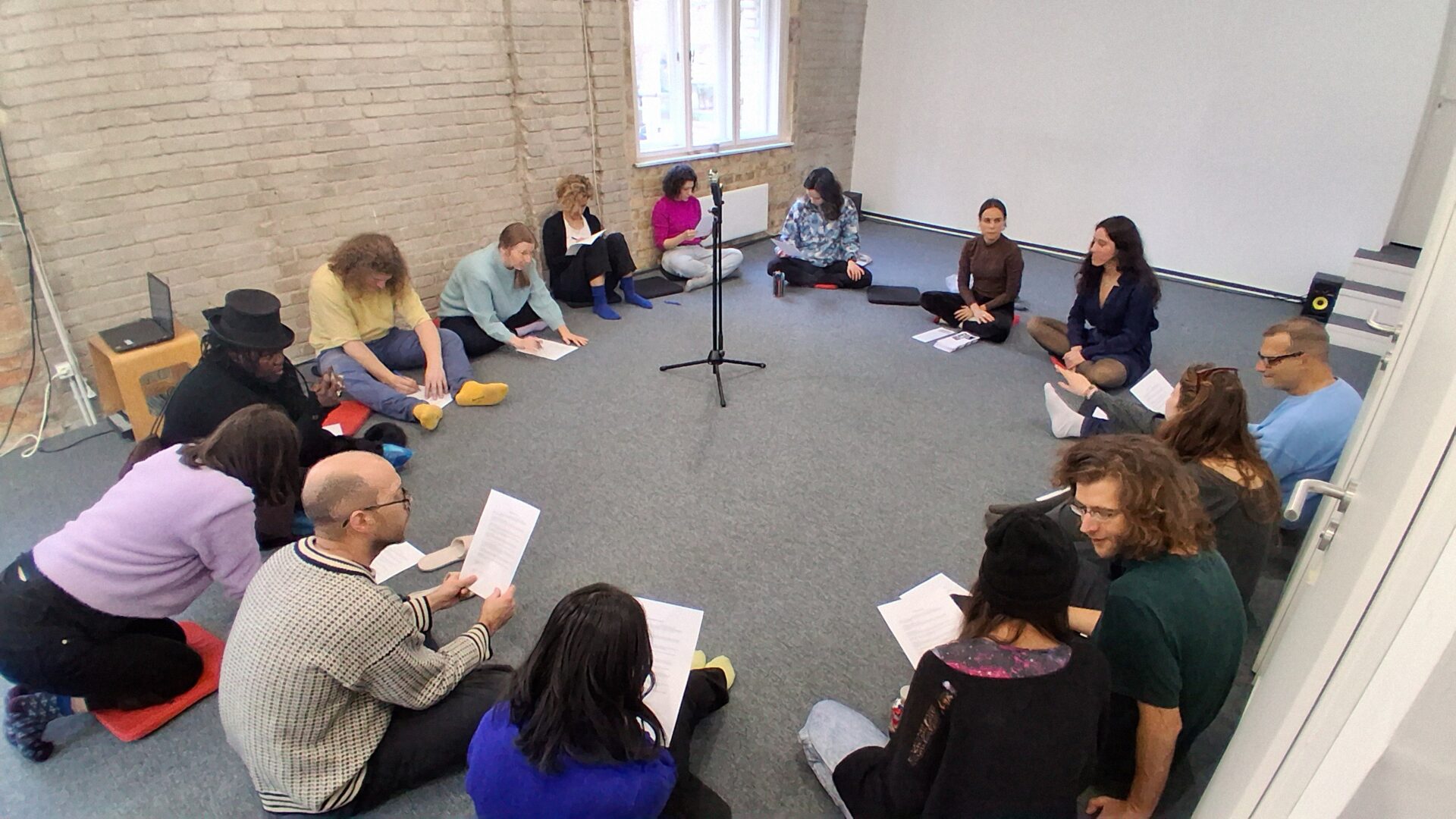
Rocío Guerrero Marín presented Sound Archive – Lisbon Botanical Garden and led the workshop Decolonial Botanical Songbook at Lehetőségek Tere. Rooted in her ongoing research into environmental colonialism, the project approached plants as carriers of memory and invited participants to reflect on extractivism, threatened species, and more-than-human histories through shared artistic practice. Through creative writing, voice, and body-based sound exploration, the workshop culminated in a collectively composed soundscape. In the context of the residency, Rocío’s work made listening into a concrete artistic method: a way of attending to ecological memory, collective presence, and the layered relations between voice, landscape, and history.
Carlos Noronha Feio
Carlos Noronha Feio developed a text-based wall work at Dobozi21 using the Hungarian phrase “Hallgass a hangokra!” (Listen to the voices!). In relation to his broader interest in language, identity, and collective meaning-making, the work can be understood as opening a space of attention shaped by resonance, speech, and presence. Rather than settling into a single meaning, the phrase moves between intimacy and encounter, carrying the atmosphere of the residency itself: presentations, conversations, music, and the shifting texture of voices shared in space. Installed within an artist-run setting, the work can be understood as turning language into a quiet threshold, where listening becomes at once inward, communal, and situational.
Andreas Mallouris
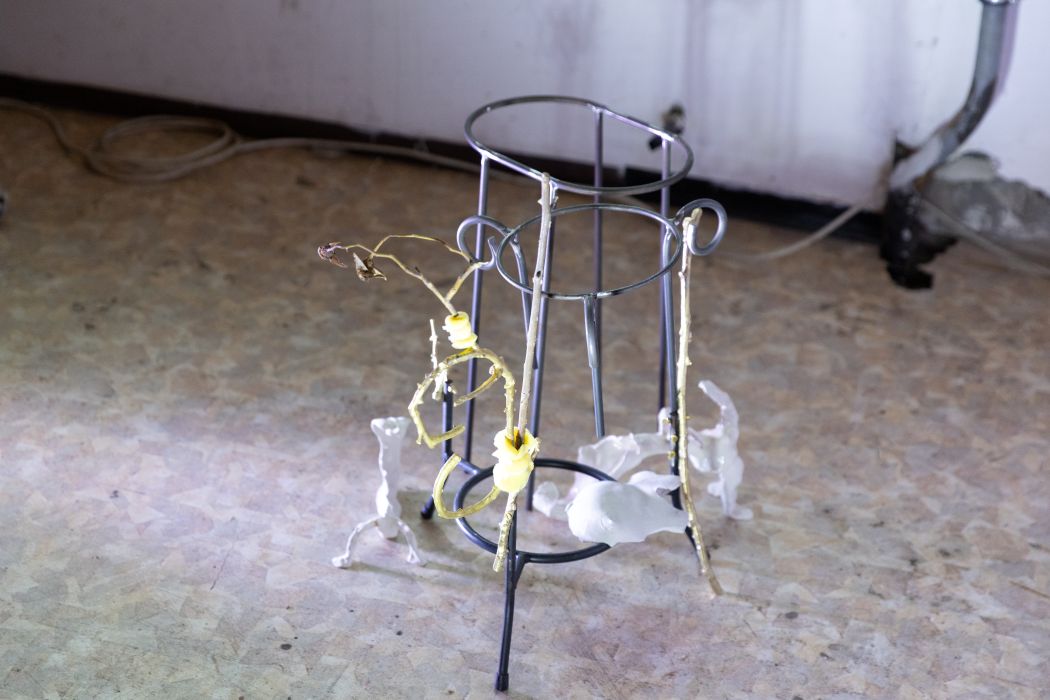
Andreas Mallouris created a work combining ceramic, wood, and materials associated with plastic surgery procedures. In dialogue with his wider practice, which explores the body in relation to memory, queer politics, and postcolonial identity, the work can be understood as reflecting on fragility, repair, and the marks left behind by transformation. Bringing together tactile and clinical materials, it resists the idea of restoration as seamless or complete. Instead, it suggests that acts of mending remain visible, and that vulnerability continues to inhabit the surface. In this sense, the work can be understood as holding together damage and care, exposing repair not as erasure, but as a form of altered persistence.
Sithabile Mlotshwa
Sithabile Mlotshwa presented a ready-made installation composed of two glass heads placed in relation to one another on top of an organ found in the space. One of the forms was marked by a translucent, collar-like addition, while the other remained more bare. In relation to her wider practice, which examines colonial conquest, trade, and structures of historical representation, the work can be understood as staging an encounter between adornment and exposure, display and containment, intimacy and distance. The organ introduces an added register of resonance and historical weight, while the doubled forms suggest a suspended exchange between presences that do not fully reconcile. The work can be understood as gathering colonial residue into a fragile and quietly confrontational image.